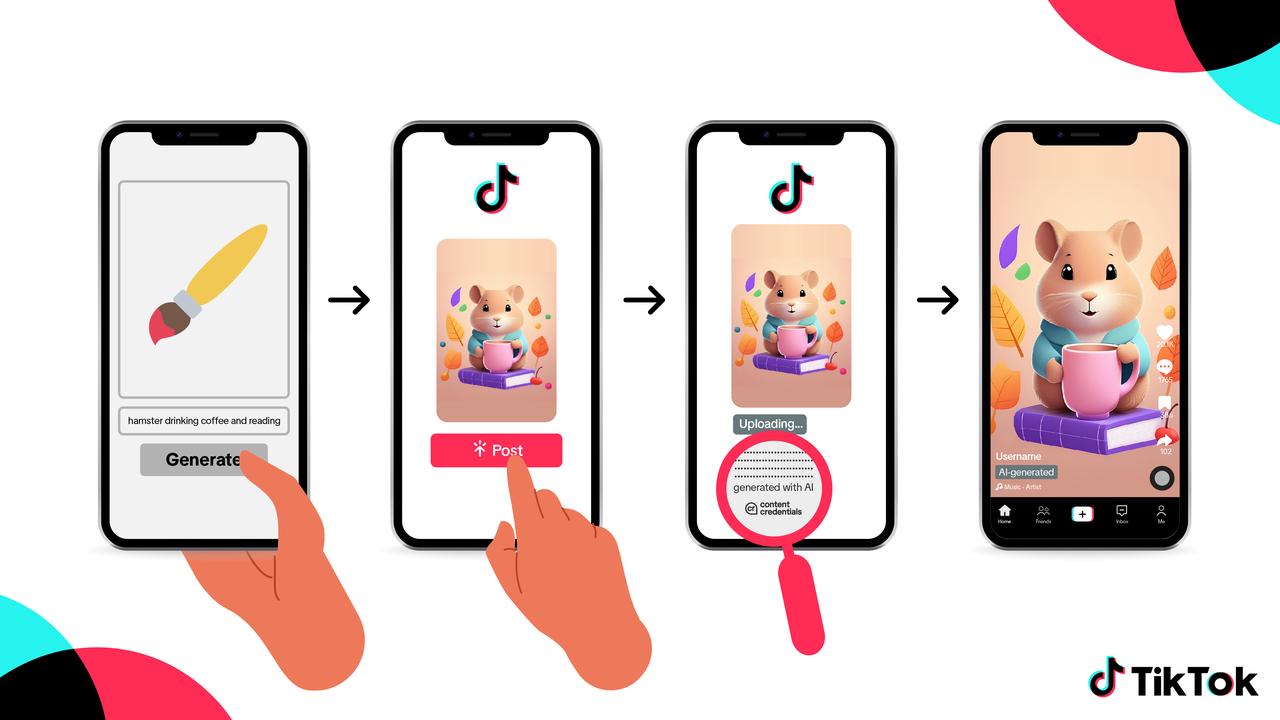
TikTok has announced that it’s working with expert organizations to promote transparency and awareness around AI technology. TikTok will now automatically label AI-generated content (AIGC) uploaded from other platforms. To do this, it’s partnering with the Coalition for Content Provenance and Authenticity (C2PA), making TikTok the first video-sharing platform to adopt Content Credentials technology. TikTok is also introducing new media literacy resources, developed with guidance from expert organizations like MediaWise and WITNESS, to help its community learn to identify AIGC and misinformation online.
A steady push for transparency as AI technology advances
AI technology can produce astonishingly realistic content, but it can confuse or mislead viewers if they don’t know it was AI-generated. Labeling content as AI-generated helps solve that problem, and for more than a year now, TikTok has required creators to use AIGC labels for content made with TikTok’s AI effects. Since last fall, more than 37 million creators have used a similar feature introduced by TikTok.
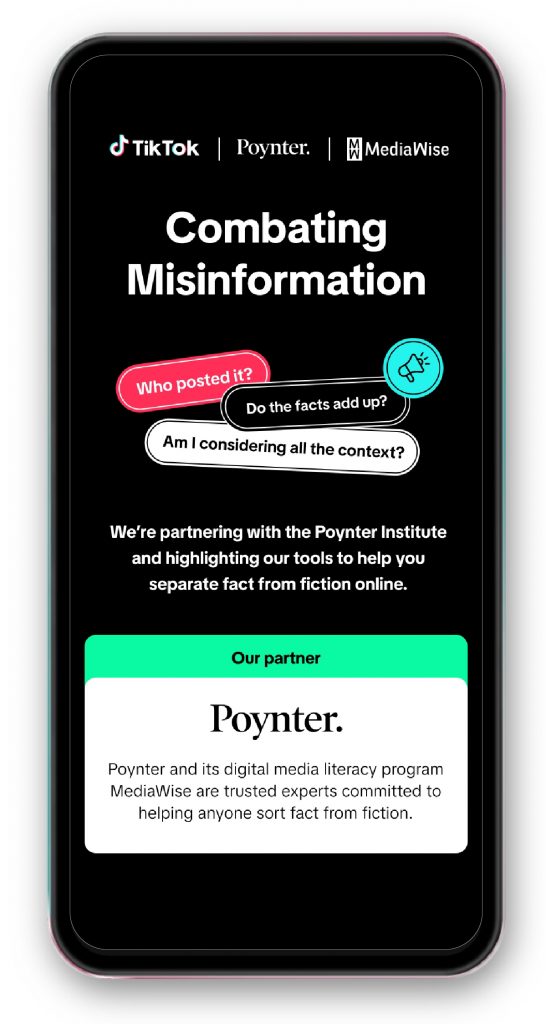
Image: TikTok
Collaborating on AIGC labeling
Using Coalition for Content Provenance and Authenticity (C2PA) technology, TikTok is expanding automatic labeling of AIGC uploaded from other platforms through Content Credentials. Content Credentials typically attach metadata to content, which can then be used to apply an AIGC label. This is already rolling out for images and videos, and will soon extend to audio-only content as well.
In the coming months, Content Credentials will be attached automatically whenever TikTok content is downloaded. This means anyone will be able to use C2PA’s verification tool to clearly see when, where, and how AIGC created on TikTok was made or edited. Other platforms that support Content Credentials will also be able to apply the corresponding labels.
Working to make this cutting-edge experience mainstream
To help drive adoption of Content Credentials, TikTok is an active participant in Adobe’s Content Authenticity Initiative (CAI). TikTok is also the first video-sharing platform to put Content Credentials into practice. Because labeling depends on Content Credentials metadata being attached, the number of AIGC pieces automatically labeled on TikTok will remain limited for now. However, as more platforms adopt the standard, a growing share of video content will be labeled over time.
“We’re delighted to be able to bring C2PA and CAI to TikTok’s global community and creators, bringing greater transparency and authenticity with it. At a time when digital content of every kind can be created at will, it’s essential to give users the tools to tell what’s real. Today’s announcement is an important step toward the outcome we’re aiming for,” said Dana Rao, General Counsel and Chief Trust Officer at Adobe.
Boosting media literacy awareness
While experts recommend AIGC labeling as a responsible content practice, they also warn that it can cause confusion if viewers don’t understand how the labeling works. That’s why TikTok is working with experts to run media literacy campaigns that help its community critically evaluate AIGC and misinformation.
Through its partnership with MediaWise, a program of the Poynter Institute, TikTok will produce 12 videos over the course of the year explaining clearly how TikTok’s efforts, such as AIGC labeling, connect content to context. Alongside videos produced with guidance from WITNESS, TikTok will also run a campaign to raise awareness of AI labeling and AIGC so viewers aren’t misled.
“Since 2019, we’ve built a strong audience on TikTok through our Teen Fact-Checking Network with innovative media literacy videos. Five years on, we’re especially excited to have another opportunity to help users tell what’s not real online,” said Alex Mahadevan, Director of MediaWise.
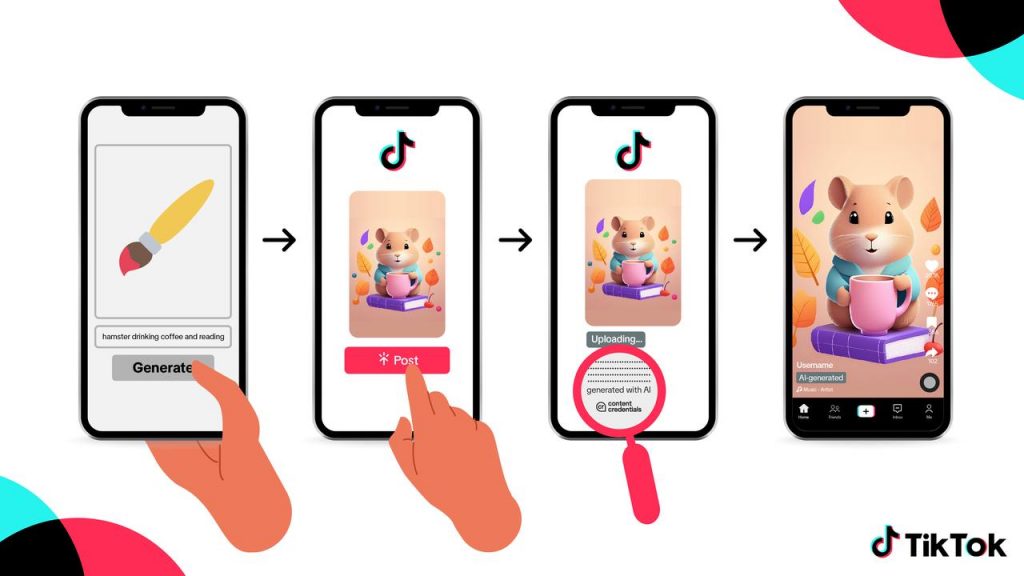
Image: TikTok
Continued efforts to root out harmful content
While most people want to engage responsibly with AI-generated content, there will always be some who use AIGC to deliberately deceive others. TikTok understands these risks well, which is why it has published strict policies banning misleading AI-generated content, regardless of whether it’s labeled, and signed this year’s industry accord to combat AI-driven election disinformation. As AI technology continues to evolve, TikTok remains committed to tackling the risks of AIGC by strengthening its proactive detection methods, consulting with experts, and working with industry partners on shared solutions. To learn more, visit TikTok’s Transparency Center.