Maybe it’s time we stopped calling this the internet era or the IT era, and just called it the Facebook era instead. Why? Because, as everyone knows, Facebook is Facebook — in Myanmar and around the world alike. YouTube, the world’s most-used video site, has around one billion active users. Twitter, another major social network, has just over 300 million users. Facebook towers above both, with around two billion active users. That makes it an extremely attractive place for businesses.
How do businesses actually do marketing on Facebook? They run ads. They advertise to build their shop’s name, or their business’s name. There are various ways to go about it — promoting a business Page so it reaches more people, growing the number of Likes on a Page, or even boosting individual posts to get more Likes through what’s called “Facebook Boost.” Website owners also advertise on Facebook to drive traffic to their own sites. With ads pouring in from all over the world every single day, how much does Facebook actually earn from this? According to Facebook’s own figures, its revenue for Q2 2017 (April, May, June) topped nine billion dollars.
But if you’re planning to advertise on Facebook without understanding how it works, you could end up wasting a lot of money. Did you know there’s a whole world of fakery around Facebook business activity? I ran into it myself, and so have people all over the world.
There’s a Facebook Page called Virtual Bagel, created by Rory Cellan-Jones of BBC News Technology. He set it up to find out exactly how much a single Facebook Like is really worth. The Page has no interesting posts on it at all — he simply started buying Likes for it.
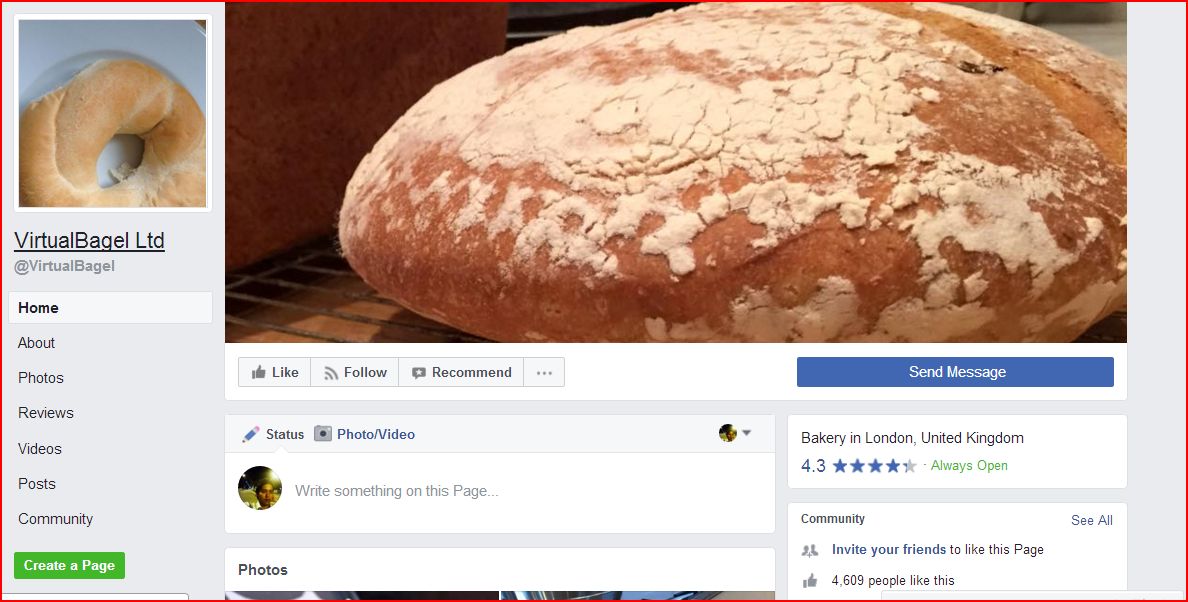
Image Source: facebook.com/VirtualBagel
That’s the Page shown in the image above. Worth noting here: there are two ways to buy Likes, a legitimate way and an illegitimate one. The illegitimate way is buying a set number of Likes from sites like Boostlikes.com.
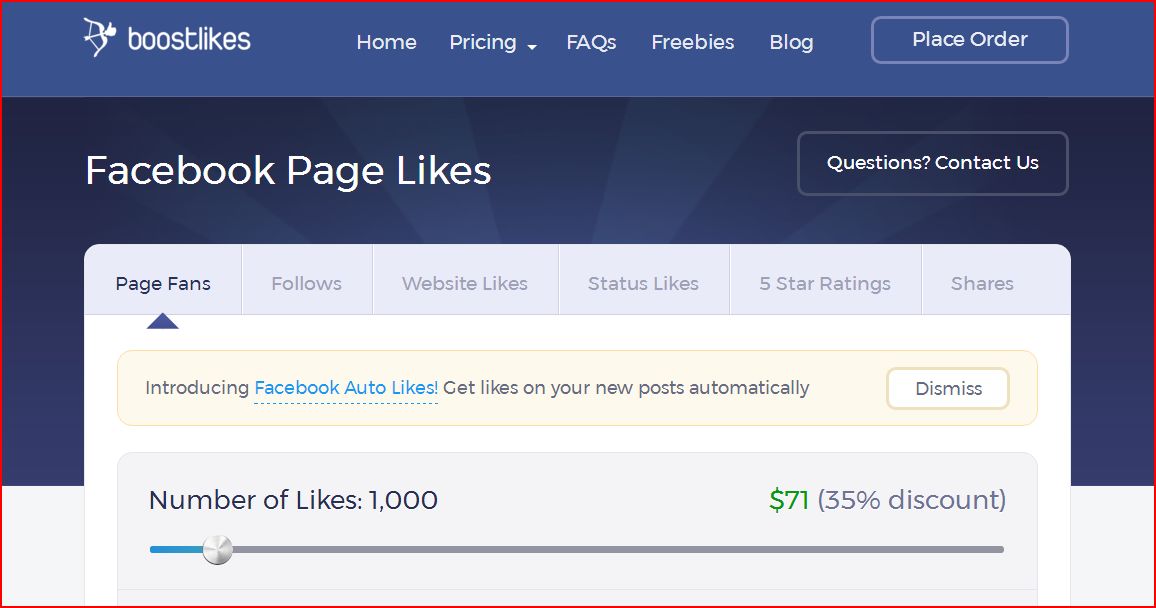
Image Source: pinnacleoffice.ca
As shown, 1,000 Likes cost $71, discounted by 35%. These sites source their Likes from click farms based in developing countries such as India, the Philippines, Nepal, Egypt, Indonesia, and Bangladesh. A click farm is essentially a group of people paid to click “Like” on pages like these. Pricing scales with how many Likes you want. Facebook explicitly prohibits buying Likes this way, and instead provides its own legitimate paid promotion route. Rory Cellan-Jones, the founder of Virtual Bagel, paid to advertise through Facebook itself, the legitimate way. Facebook lets you choose which cities or countries you want your Page shown in — in other words, whose eyes you want to reach. Cellan-Jones chose the US, UK, Russia, India, Egypt, Indonesia, Malaysia, and the Philippines. His Page, with no interesting content whatsoever, picked up 1,600 Likes in a single day. When he looked at where those Likes were coming from, most were from Egypt, Indonesia, and the Philippines — with almost none from the US or UK. It turned out developing countries accounted for the vast majority of the Likes.
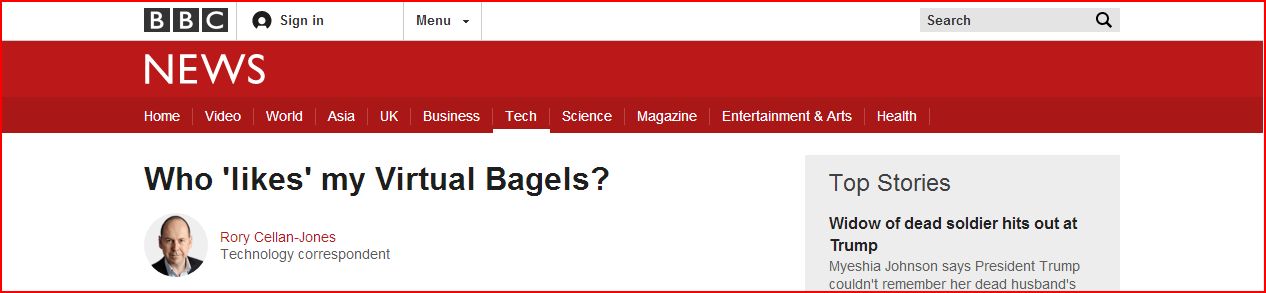
Image Source: bbc.com/news
The image above is from the BBC page where he wrote up what he found. On a later attempt, when he chose only the US and UK for targeting, the Like rate dropped noticeably — and the top countries for Likes were still Egypt, Indonesia, and the Philippines. Why were so many people from countries he never even targeted liking a page with nothing on it? Worse still, when he grew suspicious and checked the accounts liking his Page, he found that many of them had liked an enormous number of other pages too — behavior that looked a lot like the work of click farms. Yet Cellan-Jones hadn’t bought these Likes from a site like Boostlikes.com; he’d paid Facebook directly for them.
About a year ago, I set up a Page of my own. To advertise it, I clicked “Promote Page” on Facebook and paid with a Mastercard. The Likes shot up immediately — over ten thousand within three or four days. But while the Page’s overall Like count kept climbing, the Likes on the posts I actually put up didn’t even reach triple digits. With Page Likes in the tens of thousands but individual post Likes so low by comparison, it made me stop and think. I kept spending, and the Like count climbed from around 15,000 to 20,000 — yet Likes on individual posts barely changed, staying about where they’d been at 10,000 followers.
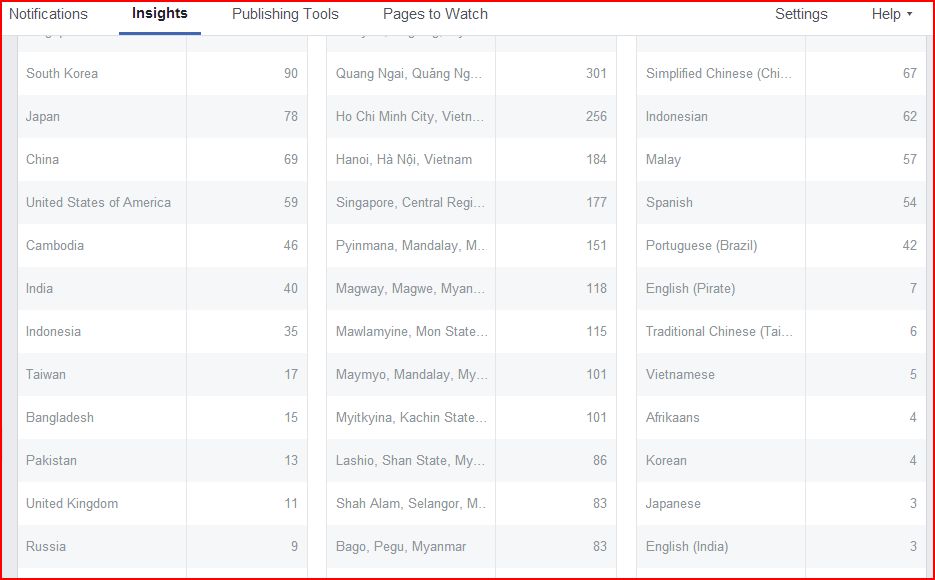
That image shows the list of people who liked my Page. Anyone who runs a Facebook Page can go check their own list the same way. As you can see, people from all over the world liked it — India, Indonesia, Pakistan, Bangladesh, and more. Since I’m from Myanmar, I had only targeted major Myanmar cities like Yangon and Mandalay when I advertised. Most of the Likes did come from Myanmar, but I was also footing the bill for Likes from countries I never targeted at all — which meant paying for essentially nothing. Like Cellan-Jones, I grew suspicious and checked the accounts that had liked my Page. Many of them had liked a huge number of other pages — anywhere from a few hundred to well over a thousand — and most of those pages made little sense: all kinds of dogs, cats, cars, motorbikes, snacks, chairs, tables. This pattern looked a lot like click farm behavior, and it lined up closely with what Cellan-Jones found with Virtual Bagel.
Likes from accounts with no genuine interest in your Page aren’t just useless — they can actively make things worse. Here’s how: normally, when you post something on your Facebook Page, Facebook doesn’t show it to everyone who’s liked the Page — only to a small portion of them. Only once those people like, comment, or otherwise engage with the post does Facebook push it out further. If your Page is full of fake Likes like this, Facebook ends up showing your posts only to a small slice of your actual real audience, since that’s the accurate readership Facebook can identify. So no matter how big your Page’s Like count looks, the post itself ends up reaching, and being genuinely liked and commented on by, very few real people. That pushes Page owners to spend even more on Facebook Boost just to get their posts in front of more people — meaning Facebook effectively gets paid twice: once to inflate your Page Likes, and again to get your posts actually seen.
The US State Department reportedly spent around $630,000 trying to grow the Likes on its Facebook Page into the millions — only to later report that just around 2% of those who liked the Page were genuinely interested visitors.
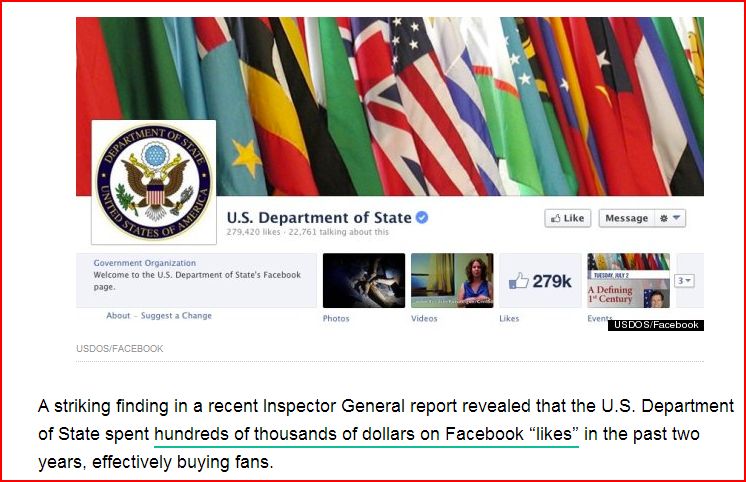
Image Source: facebook.com/usdos
So how do you deal with this? Unfortunately, you can’t just delete these fake Likes — there are simply too many accounts involved. For these click farm workers, the money you spent was pure waste. And in my case, and Cellan-Jones’s, these Likes weren’t bought from a click-farm site like Boostlikes — they came through Facebook’s own legitimate ad system, and they clearly weren’t bots either, since bots are software that carries out internet tasks and are relatively easy for platforms to detect and shut down. So what if you just advertised without targeting these countries at all? That wouldn’t solve it either — in my own case, I only targeted cities inside Myanmar, and people from all over the world still liked the Page, as shown above. It’s hard to make sense of why. It seems unlikely that Facebook is deliberately serving your ads to countries you never targeted. In the end, one article I read online offered an explanation I find plausible.
The gist of that article: click farms also like pages that haven’t paid them, simply so that their activity looks more natural and doesn’t get flagged and blocked by Facebook for suspicious behavior.
There’s another Facebook quirk worth knowing about: most posts simply aren’t shown to you. You don’t see every post from everyone you’re Facebook friends with — only a portion. The same goes for pages you’ve liked, or celebrities you follow: you only see some of their posts, not all of them. Likewise, when you post something, it only reaches some of your friends, not all of them. Facebook only pushes your post out to more of your friends once the people who did see it engage with it — through a like, a comment, a share. You never get to see exactly how many people your post actually reached. Think about what that means for your own News Feed: posts you rarely like or comment on gradually show up less and less, while the things you’re already interested in keep appearing more and more. That means if you genuinely like a post, you really do need to hit “Like” for Facebook to register it — someone who likes a post but rarely clicks the button may simply stop seeing content they’d actually enjoy. Facebook’s system essentially expects some kind of engagement — a like, a comment, anything — whenever you genuinely like something. Curious what tends to get the most Likes on Facebook? Photos of newborn babies and wedding photos.
Facebook has an official response to some of this. On average, a young person has around 300 Facebook friends, and the average Facebook user has liked around 40 pages. Roughly 4.8 billion posts get shared every day. If you use Facebook once a day, that works out to roughly 1,500 posts you could theoretically see — which is why Facebook says a filtering system is necessary. The catch is that the filtering method Facebook uses is largely designed around its own revenue. Because of that filtering, Pages naturally feel pushed toward using Facebook’s “Promote Page” feature to reach the Likes and audience they want. And “Boost,” mentioned earlier, is exactly that — paying to get an individual post shown to more people. If you’re new to running a Page, you might assume that everyone who’s liked your Page will see every post you make. In reality, though, it only reaches a small subset of them.
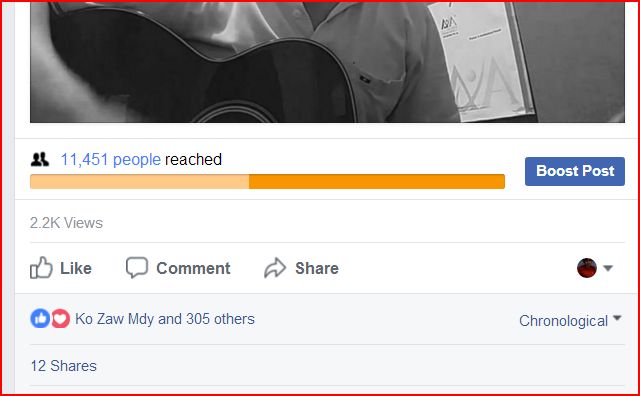
So, as shown here, you generally have to click “Boost Post” and pay Facebook to get your post shown to more people. Even people who’ve already liked your Page often only see your posts once you boost them. Only the person doing the boosting gets to know how many people it actually reached.
On YouTube, the most-watched video platform, creators earn more the more views their videos get. Facebook works the opposite way: creators have to pay to get more people to see what they’ve made. It comes down to how each platform’s business model is built.
Whatever the mechanics behind it, Facebook — still the most widely used platform out there — continues to be full of Page owners with huge followings and real fame. Whether you use Facebook for business, you’re a public figure, or you’re just a regular user, understanding these mechanics can be genuinely useful to you.
Nyi Nyi Tun